Leaves Of Life - - - Botanicals
info@leavesoflifebotanicals.com

Books by Kazembe Bediako
Herbal wisdom, ancestral knowledge and the epic Behutet Series from the founder of Leaves of Life Botanicals.
★ Read the Book ReviewsLeaves of Life Herbal Series
Traditional herbal knowledge for healthy living, by Kazembe Bediako.


Leaves of Life Vol 1
$20.99
ISBN 978-0-9845715-3-6
The Behutet Series
The epic journey of Heru, the divine warrior.
The Tuat & Kamitic Wisdom
Ancestral wisdom from ancient Kamit.
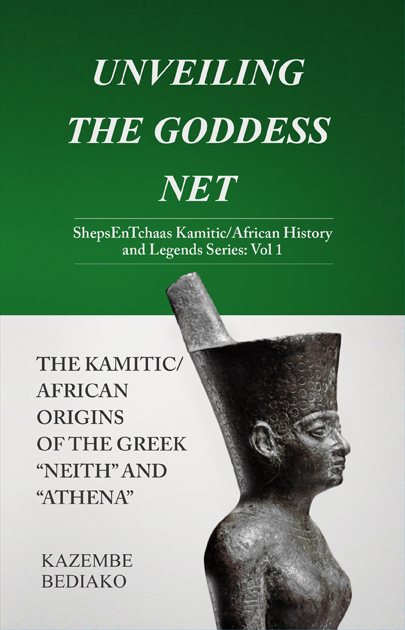
Unveiling The Goddess Net
Coming Soon
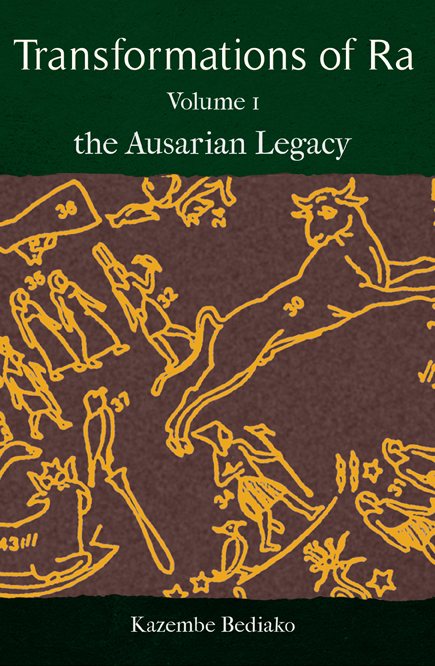
Transformations of Ra
Coming Soon
Book Reviews
What reviewers and readers are saying.

Book Review
Leaves of Life: Volume 4
“A timely, critical, and indispensable clarification of the current popular dietary regimes overflowing the media.”
Read the full review
The fourth installment of the Leaves of Life series has arrived. So far author-researcher Kazembe Bediako has taken his readers on a global expedition to find the most important life-enhancing plants and herbs to ensure practitioners can live their best lives. He has toured the planet with an eye on bringing readers to their peak health and how to remain balanced and whole.
This fourth volume does the reverse. The text focuses on the individual’s body with a global eye out for the most effective dietary practices. Because of the overwhelming landslide of information regarding this diet versus that eating program, Bediako has made a scientific review of the most popular nutrition regimens on the market today. His side-by-side comparisons and analyses of each plan takes the confusion out of which to choose.
Bediako clearly explains our bodies’ composition and changes over the millennia and why our optimum health demands that we eat in ways that the consumer market simply does not understand or conveniently ignores for popularity and profits sake.
This volume matches the body’s needs with cultural, economic and spiritual parameters for the safest improvements across one’s life span.
As with previous volumes, Bediako explains why each food is needed and what foods should be avoided. His explanations take us right down to the cellular level without confusing jargon. Yes, he explains the science. No, he doesn’t go over the reader’s head without uplifting understanding and comprehension. However, Bediako’s tone never talks down to the reader. He is providing information so we can make up our own minds; he is never preachy nor patronizing.
This book is laid out in a visually inviting manner that guides readers through enlightening data and evidence. As usual, Bediako has multiple tables and references to previous research so we can plainly see sources and use the information to make vital decisions on how to proceed on our life journey.
A welcome addition to this volume is the use of more than 60 flowcharts and figures in full color. These easy-to-read charts are summaries of the text in creative formats that act as visual aids. While Bediako has used drawings and photos throughout the Leaves of Life series, this is his first book to use such colorful charts to enhance and review his text.
Because of the centuries of factual information that Bediako has examined, we benefit from his years of prolonged investigations and searches. His distillation of so much knowledge has now stretched to four volumes of essential material for the beginning novice seeking a healthier way of life, the veteran of holistic living, and everyone in between.
Whether the reader owns the previous three volumes of Leaves of Life or is just now discovering Bediako’s series, Volume 4 is a timely, critical, and indispensable clarification of the current popular dietary regimes overflowing the media. It is a rational weapon in the battle against physical, mental, and spiritual imbalance and illness, on the trek towards wholeness and well-being.

Book Review
Leaves of Life: Volume 3: Herbal Remedies and Formulas
“The writing is inviting, educational and inspiring. While Bediako goes deep into the science he never bores.”
Endorsements
“‘Back To Eden’ on Steroids!!!”
Hehimetu Ra Enkamit, PhD, author of “Yes We CANcer, If I Had To Do It All Over Again”
“Kazembe Bediako’s research and his new book is game changing in sharing the herbal anecdotes and science to heal, restore, and rebuild our cognitive abilities and our overall well-being to deal with sleep disorder, loneliness, and psychological trauma.”
Dr. Nooma Monika Rhue
Read the full review
Kazembe Bediako returns with his third volume in the Leaves of Life series, a global excursion of the world of medicinal herbs. This journey takes the reader through ancient lifestyles with modern explanations. Bediako informs about the land and culture from where the herbs arise; how the herbs have been used traditionally with current applications; the chemistry behind how each herb interacts with the human body; the physiology of how the body’s systems network and cooperate with and because of each herb; and how the reader will best be served physically, mentally and spiritually through the proper use of each herb within a healthy lifestyle. This third volume doesn’t only list scores of life-enhancing herbaceous plants and their derivatives, but recommends holistic lifestyles including fortifying exercises for the mind, body and spirit.
The text is heavily notated, quoting sources new and old. The writing is inviting, educational and inspiring. While Bediako goes deep into the science he never bores. While he has the background to be a guide he never sounds preachy or talks down to the reader. His genuine concern for the reader’s health is evident throughout each chapter. At the end of each section he reminds the reader a healthy diet, meditation and lifestyle choices are the best way to get the most out of herbal remedies.
The idea that food is medicine is exemplified throughout this printed invitation to good health, mental uplift and spiritual growth. Bediako makes plain the quote, “…and the leaves shall be for the healing of the nation.” His wholistic approach to a healthy lifestyle makes it plain that everyone can live life to the fullest in the simplest of ways. No one need a despondent life of unease, disease, stress, anxiety nor uncertainty in endless hospital visits and fear of not enough insurance coverage. This is what personal preventative medicine looks like.
Because this is a reference book it is lengthy, but contains several tables which condense and summarize information for the reader’s convenience. Just as important, Leaves of Life explains how herbs taken in combination can enhance the whole body systemically.
Bediako highlights products available for the reader that already have herbs in important combinations for holistic treatments and all-around good health. Whether the reader is seeking a preventative regimen or treatment for specific ailments, this third volume of Leaves of Life is a valuable tool in the arsenal of good health.
Whether you are taking your first step to experience personal control of your health or you are well on your way to being your best self, Leaves of Life, volume 3, is an excellent roadmap to help continue your movement forward.
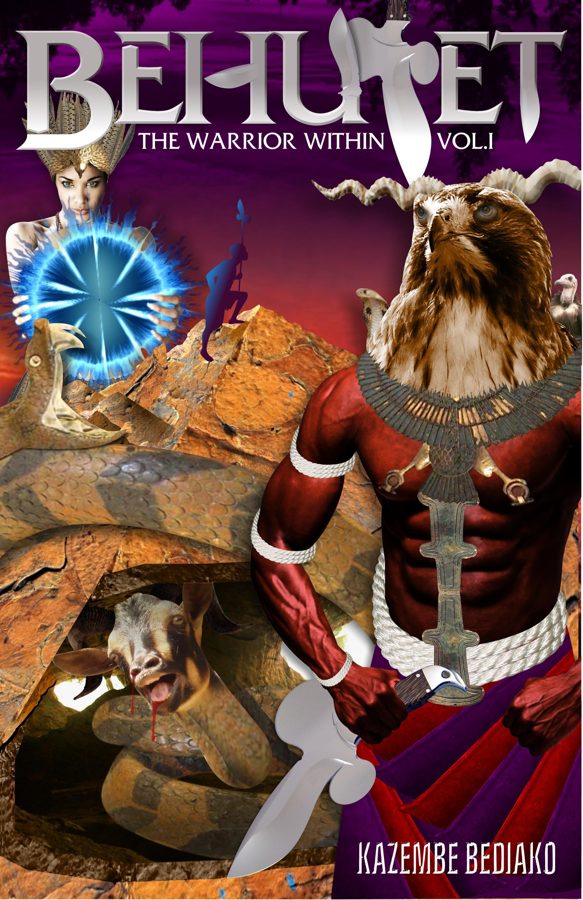
Book Review
Behutet: The Warrior Within: Vol I
“A literary package replete with African spirituality, urban grit and cultural/historical allusions.”
Review by Shekhem-t Maauti Urrama
Read the full review
Good vs. evil. Ancient vs. modern. Physical vs metaphysical. Inner peace vs tension. Through an array of characters, Kazembe Bediako explores these themes in his 201 page, “urban Kamitic legend,” Behutet: The Warrior Within: Vol I and in the process delivers a literary package replete with African spirituality, urban grit and cultural/historical allusions. First published by Khianga Publishing in 2011 and set primarily in both Ancient Kamit (Egypt) and modern-day America, the book “traverses two worlds.”
These worlds, not only physical but also extra-terrestrial, vivify Brooklyn bad boys, Harlem gangsters, Kamitic priests and sages, shape shifters, corrupt NYPD officers, and an assortment of other colorful denizens. Bediako populates the pages of Behutet: The Warrior Within: Vol I with a potpourri of characters that leap across the fluid barriers of each page to function in both modern and ancient times as well as in physical and esoteric realms. While some clearly align themselves with the legions of good or evil, others don’t fit neatly into either category.
Eventually evolving into a moral champion, Ra Heru Khuti the protagonist and descendant of the great warrior, Heru Behutet, accidentally discovers an ancient Kamitic text, The Papyrus Am Tuat. In so doing, he unwittingly places himself within the crosshairs of the evil genius, Sethe, “who will stop at nothing, including murder, conspiracies and mayhem to get his hands on the Papyrus and rebuild his evil empire.” Ra Heru Khuti devotes himself to aborting Sethe’s diabolical mission, at all costs. After stumbling upon the mysterious scroll, “Ra Heru Khuti … felt drawn to The Papyrus Am Tuat as if it had become his personal guide, his destiny, or his purpose in life.” Sethe and his henchmen, especially his sidekick, Apep, pursue Ra Heru Khuti and terrorize their target’s family and friends in their efforts to snatch the coveted Papyrus Am Tuat. In the end, Ra Heru Khuti and Sethe fight the final battle (of Vol I) and the hero unlocks the gates of victory with the powerful keys of peace and divine guidance. Good prevails over evil in this round. The book is the first in a trilogy.
In stark contrast to the protagonist, the novel’s malevolent Sethe quickly emerges as the antagonist, but some of its supporting characters straddle opposing worlds. Would-be rapper, street hustler, and drug dealer, Khetnu, on the one hand descends voluntarily into the murky netherworld of criminal activity, but eventually finds redemption in the richness and sanctity of his African, ancestral past. In his initial “transcendental” experience, “[d]evoid of training in Kamitic cosmology, he [Khetnu] could not control his thoughts, even though his spirit claimed this energy. It was as if he was out of his body, but looking down at himself expanding way up into the sky, growing taller and taller. Then he saw his head become the head of a hawk. He felt faint as he soared above everything. He was flying above all of his conditionings, all obstructions, and obstacles. He had the power.” Now he truly possessed the freedom to chart his own course in life and travel on a high road.
For audiences accustomed to the linear transformation of characters in Western literary canons, Bediako’s concentric, Afrocentric transformative model may encapsulate events that seem quite unexpected or even jarring; however, Khetnu’s sinner-to-saint experience, when perceived through the writer’s fluid lens, fits perfectly into his storyline. So does the physical transformation of Sekhet from a bland older sister into a fiercely protective being, who uses her powers to vanquish Ap, Sethe’s confederate and attacker of her younger sister, Bast. In one of the book’s many action-packed moments, the author recounts the culmination of Sekhet’s gory fight with Ap: “Without hesitation, Sekhet jumped on Ap, cutting and hacking his head from his neck with her laserlike beams of light. She tore out his intestines and kicked them into the fireplace with her left leg and burned her name into his body with her beams of light, driving his soul from his body. Then, by making sounds unheard of by the human ear, she dragged his life force out of his body and obtained mastery over his body-Ka.” At first glance, Sekhet’s conduct might seem villain-esque, but Bediako, through this scenario, succeeds in sending readers the message that one must choose to fight evil, fiercely, if need be, in defense of good.
The author, informed by his background in Kamitic cosmology, also suggests through the words of the revered priest and sage, Shekhem Khesnu Neter, that the outcome of this battle of good vs evil, rests firmly on the protagonist’s ability to hold on to his inner peace. “Anger is Sethe’s weapon. To defeat him you have to go within!... It is the [peaceful] warrior within you that will defeat him,” Shekhem Khesnu Neter counsels Ra Heru Khuti.
Equally at home with ancient as well as modern cultural and historical references, Bediako weaves them into his story and creates connections to the plot for readers of varying ages and backgrounds. Bob Marley aficionados will appreciate his extended tribute to the reggae icon’s musicology, which Bediako deftly embeds in Ra Heru Khuti’s memories of his friend Khepri. Vive artistic syncretism!
In the same allusive vein, the author expands readers’ perspectives through references to a range of historical topics, including the Gullah people of South Carolina, Osceola, the Seminoles, Sullivan Island, Guyanese independence, The Civil Rights Movement, Khamitic spiritual culture, the Rosetta Stone, traumatized Rwandan child soldiers, and even wealthy 19th century Europeans’ celebratory consumption of mummy flesh. Although this topical palette seems disparately multichromatic, Bediako manages to integrate each topic, coherently, into his story, and teases out relatable links in the reader’s mind. Furthermore, geographical connections abound in his references to specific Brooklyn streets and New York City neighborhoods; these enhance the book’s “urban” appeal and help to place it securely in the urban Kamitic legend genre.
In grasping the complexities of this “Nu” genre, readers, especially those unfamiliar with Kamitic names, might find the steady entrances and exits of new characters somewhat disorienting. Some only show up to deliver a thematic message or historical reference, and then disappear abruptly. Keeping track of all the characters that meander in and out of chapters and scenes could distract readers; therefore, fewer characters and a list of their names and relationships would have helped readers to better navigate the plot. More fully developed female characters, undoubtedly, await the advent of Behutet Vol II to make their debut.
Despite its overcrowded field of characters, and the author’s occasional deviations from standard English Language conventions, Behutet: The Warrior Within: Vol I stands out as a vehicle that all, who welcome the challenge of exploring enlightening spiritual worlds, can use to “traverse [the] two worlds” against the scenic backdrop of our modern experience. On the journey, access the life-altering messages that Kazembe Bediako, an urban Kamitic legend pioneer, has so aptly delivered.
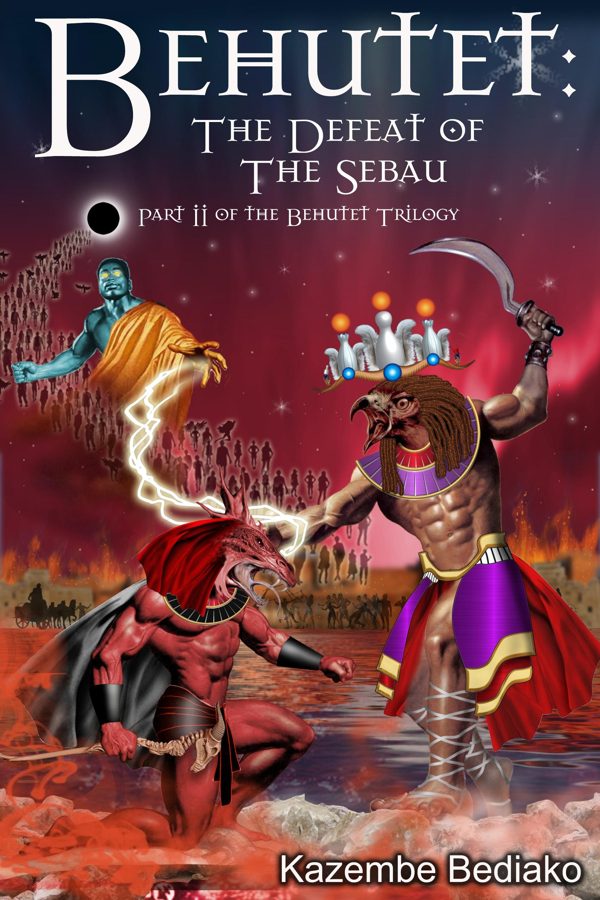
Book Review
Behutet: The Defeat of the Sebau — Part II of the Behutet Trilogy
“Bediako seamlessly blends the Ancient teachings and history of Kamit with modern-day urban experiences.”
Review by Sh. NuAuMu Samga
Read the full review
Kazembe Bediako’s second volume in his Behutet series, The Defeat of the Sebau, ferries the reader between slow-moving, detailed, developmental streams of consciousness and those that are tumultuous, chaotic and action-packed. In this 162-page urban Kamitic legend, Bediako seamlessly blends the Ancient teachings and history of Kamit (Ancient Egypt) with modern-day urban experiences and gives the reader a perspective of how to inject the Ancient Wisdom of our Kamitic ancestors, as a navigational tool, into our modern-day lives.
Ra Heru Khuti and Sethe, the main protagonists in the story, engage not only in the external battle against each other but also the internal personal battle - to learn how to cultivate and properly use the natal power of the spirit which we all have access to. Ra Heru Khuti is blessed not only with seasoned priests and companions who are initiated into a way of life that promotes preserving the welfare of all - including transgressors - but he is also blessed with access to a host of ancestors who support him in his battle to restore and maintain order within his own person and in the world. With Sheps Abaso as his war counselor — a female (in case you assumed that all war counselors are male :) — Ra Heru Khuti draws up a peace plan to win his battles against Sethe. He also acquires a clear vision of the future when he hears voices “bidding him to tell the sons and daughters of the great Mount Babalasaam, Luk Muk and Qumram of rites that shall walk the earth again in ancient names” — a return to the ancient way of life where peace as the foundation of life is established by “get[ting] my person out of the way … and announcing my victory over the inept emotions…”
But a true balance between the use of spiritual power and physical means is maintained in the battle scenes where Ra Heru Khuti has a cadre of those well skilled in the art of war — both male and female units, using a variety of weapons including sound. Led by Mangala Kum Ra, the Wordless Warriors use “certain precise sounds … to affect everything in the world. They do not carry weapons. They sit in meditation and chant, making sounds that affect things.”
Sethe’s battle plans parallel that which the modern reader is more familiar with — rule through fear and intimidation — conquer the enemy by instilling within your supporters, terror and fear of “the enemy”, and by setting up an “...artificial world…” of cities — “...with non stop action; pulsating neon lights, blaring music, and plastic people ...trafficking in every commodity known to man” … “conniving in suppressing valuable discoveries…that would allow people to discover the potential healing power within themselves” … because... “it could cripple the health [medical] and pharmaceutical industries” — so that those in leadership “can take advantage of the confusion.” The list of means to maintain power through intimidation, mistrust, and violence, and thus suppressing the awakening of the spiritual power of the masses is ad infinitum.
Bediako intersperses vivid scenarios displaying the workings of the Sethian power structure through the experiences of several characters, Hatti and Mnifa, Khatsaraim, Neru, Ras, Khetnu, Aqmeri, and Nephthys. How familiar are we, today, with scenarios of the utter confusion that engulfed Hatti’s entire neighborhood when friends and neighbors tried to restrain her drug-driven emotional response to the killing of her sons and her encounter with the police who after punching her in her face, shot her “all nine pellets … struck her at point-blank range, in the chest, killing her”? The rage exhibited by Neru and Ras which ended in the senseless deaths of both Khatsaraim and Ras display the Sethian world where emotion-driven action is the order of the day, the “natural” response of the human. And the same story played out in the deaths of Monica and Nephthys whose stories depict the Sethian world filled with motherless and fatherless children left to be raised by aging grandparents — and a recipe for the multi-generational disintegration of the family. Aq Meri’s drunken encounter that erupts into a police car chase, and ends in the wreckage of several parked cars, an overturned ambulance and the explosion of a wrecked car leaking gas is the typical example of the chaos that can culminate from nights and days of indulging the sensual cravings fostered by the acceptance of the Sethian way of life — indulge in Sethe’s material pleasures and receive the rewards for your loyalty, intimidation, violence and psychological abuse.
Maintaining the driving theme of this book, Sethe’s pursuit to regain the Papyrus Am Tuat, Bediako meticulously crafts vivid sketches of the strategies of each battlefield general, guiding the reader through powerful visuals of the battle between Sethe’s “poorly trained and overconfident…” infantry and Ra Heru Khuti’s troops of ancestrally guided initiates, and the devoted Shemsut Auset, and Shemsu Heru.
Sethe’s attempt, before the battlefield victor is declared, to “call forth” his ancestor Mortimer Seth through the use of both words inscribed in the Papyrus Am Tuat and the technology produced by the scientists he had kidnapped, meets with dismal failure. He is unable to awaken “the seven thousand-year-old evil monster, Mortimer Sethe.” Compounding Sethe’s failure, his excursions on the battlefield result in “a disastrous defeat for Sethe but one of Ra Heru’s finest victories…” which serves as evidence of the evolution “of the unbroken chain of ancestors that kept the wisdom alive and ensured victory on the battlefield.” Additionally, Ra Heru Khuti frees Ausara and regains possession of the Papyrus Am Tuat.
But … the story is not over yet, yes there is more to come ...for “Ra Heru Khuti raised his long sword to decapitate Seth when a bolt of lightning blasted his sword and out of nowhere several Ashemu appeared surrounding and restraining him. The Ashemu would not let him kill Seth. Ra Heru Khuti stepped back and submitted for he knew the awesome power of the Ashemu” and he did not want to transgress divine law.
Sethe will continue to pursue his desire to gain total control and power, by any means necessary and Ra Heru Khuti through his initiation into living by divine law will continue to fight Sethe and his confederacy to reestablish Ausar in the world.
To complete the series, you must read Behutet: The Destruction of Man - The Last Book of the Behutet Trilogy and discover the hero’s path — learn to defeat the “children of impotent revolt” and free your own life force of the negative effects of emotions. Realize your divinity and append the title “Ausar” to your name!
Book Review
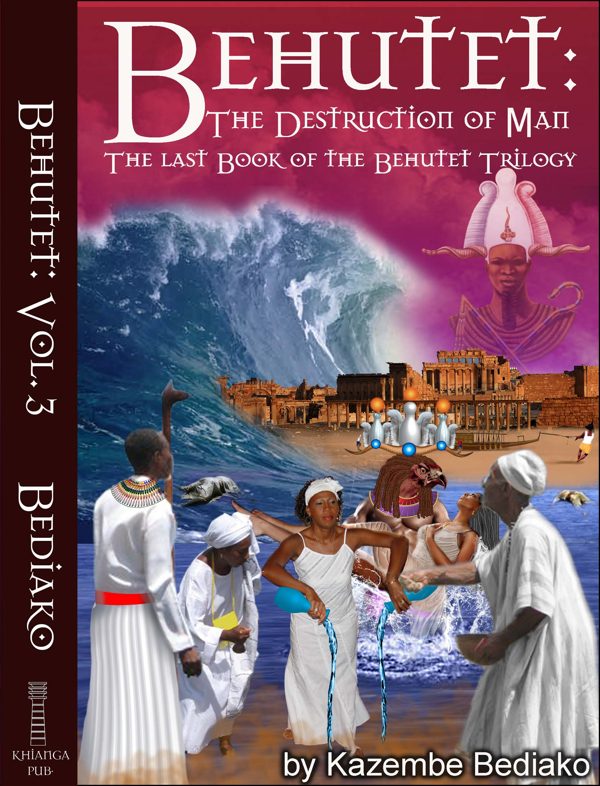
Behutet: The Destruction of Man - The Last Book of the Behutet Trilogy
“A fascinating and instructional novel.”
Read the full review
For readers who relish setting aside a full day to immerse themselves wholly in a good read, one that they find or are recommended, Behutet: The Destruction of Man - The Last Book of the Behutet Trilogy, a 200-page new suspense fiction genre that integrates Ausarian cosmology with contemporary life, written by Kazembe Bediako and published in 2013 by Khianga Publishing, will prove to be a laudable occupant of their entire day.
This is no simple storyline of “good versus evil.” Bediako merges two storylines, one set in the past dynasties of Ancient Egypt - Kamit, and one in the present-day USA, and some of his characters migrate between the two time periods and settings. The author also proposes that “good” and “evil” in society occur in cycles - inevitable cycles. Bediako, through the struggle of the main characters in his novel, also proposes solutions for how to survive the “bad” cycles, how to prepare for, and ride high on the wave during the cycles of “good”, and even suggests ways to prolong the “good” cycle, for centuries. The key he makes available to the reader is the importance of unifying oneself “with the World by replacing information that is restricted to the external aspect of things with knowledge of the underlying principle and essential state of being”. He postulates that “now is the time for the oldest religion known to man to retake its place among the great spiritual teachings in the world in order to lead the world out of its spiritual bankruptcy. It is spirituality - and not war, financial schemes, or politicking - that will save the world.” The state of war and peace within and between nations depends on our leaders especially, and on our own ability to “reunite with God, and replace the words of “man”, that dominate our explanation of ourselves and of God, with those of the Metu Neter,” the Word of God, as instructed in the Ausarian cosmology.
The two protagonists in the story, Sethe the evil genius and Ra Heru Khuti, lock horns in their struggle to influence and control the trajectory of the Ancient Egyptian dynasties. Ra Heru Khuti, against the counsel of the great Metu Neter Oracle, attempts to pre-empt the cycle of evil, predicted to return to the west, by preventing the spirit of the evil genius, Mortimer Sethe, progenitor of conflict and chaos, from awakening and re-entering the world.
In Bediako’s parallel storyline, the conflicts between Tugaloo and Neru, and between Nephthys, and the African Obi man who admonishes her to eschew blood sacrifices, complement the power struggle between Sethe and Ra HeruKhuti.
Readers will journey with Sethe and his evil confederacy - an ultra-secret agency, powered by private networks of multinational corporations, who select and propel aspiring regional leaders onto the world stage in a shadowy, one-world government that undermines independent states through anti-sovereignty, covert operations. Sethe’s confederacy instructs members with key positions in government, the mass media, financial institutions, the military, and the National Security apparatus to affect public policy and further its agenda of ruthless dominance of the few, through fear-mongering and unrest.
Ra Heru Khuti and his supporters engage Sethe in several well-crafted battles that swing between victories, losses, stalemates (according to the cycles of “good” and “evil”), and several successful and failed conspiracies, ultimately culminating in a win that places Ra Heru Khuti in the midst of a conflict among the priesthood which forces them to acknowledge that Sethe, the symbol of “evil” will rise again. Sethe’s “energy is not to be destroyed but controlled. It is his nature to create dissension and mischief in the world and it is Ra Heru Khuti’s nature to defeat the Sethian impulses, to ensure all those who transgress ... [and those who live by] ... the 11 laws, receive justice”.
The final chapters culminate in celebrations in the parallel worlds - each according to its accepted ceremonies and rituals - to dispel and ward off the possible return of the cycle of evil. In Money, Mississippi, through the superstitious act of “Crocus B on leaving the house of the dead boy … [Neru] ... reached down and dug up some loose mud, and with his backhand turned to the house, cast it behind him between his legs to prevent the deceased person from following him home.” In the ancient world of Sethe and Ra Heru Khuti, “the Ashemu recognized the king as one of them incarnated into the human form to uplift Mankind and restore the human to its original Divine State. Everyone knew the transformation of Ra had taken place. Ausar’s light illuminated the Duat.”
While Behutet: The Destruction of Man - The Last Book of the Behutet Trilogy proves to be a fascinating and instructional novel, readers, in moments when challenged to place particular chapters into the context and flow of the storyline, or when encumbered by the need for editing, should simply edit where necessary and read on to the end. To fully appreciate and contextualize the storyline, readers would benefit from consulting the glossary to discover the more deeply rooted meanings of several keywords such as Anpu, Ap, Apep, Ashemu, Ausar, HeruKhuti, Meshu Betshet, Papyrus Am Taut, Ra, Setians, Sethe, and Wives of Amen. A map that depicts the geographical placement of the nations, cities, and towns would also enhance future publications of the Behutet Trilogy.
To unearth the jewels in this story, reflect on the complete message which emerges after you put the book down. In a second and a third read, focus on and find the obvious, as well as the subtle revelations of the source of “evil” in our world today. Bediako’s perspectives on the battle of “good” and “evil” derive from insights he has gained from his study of the wisdom teachings and history of ancient civilizations and living the Ausarian cosmology of ancient Kamit.
Enjoy the read!
Book Review
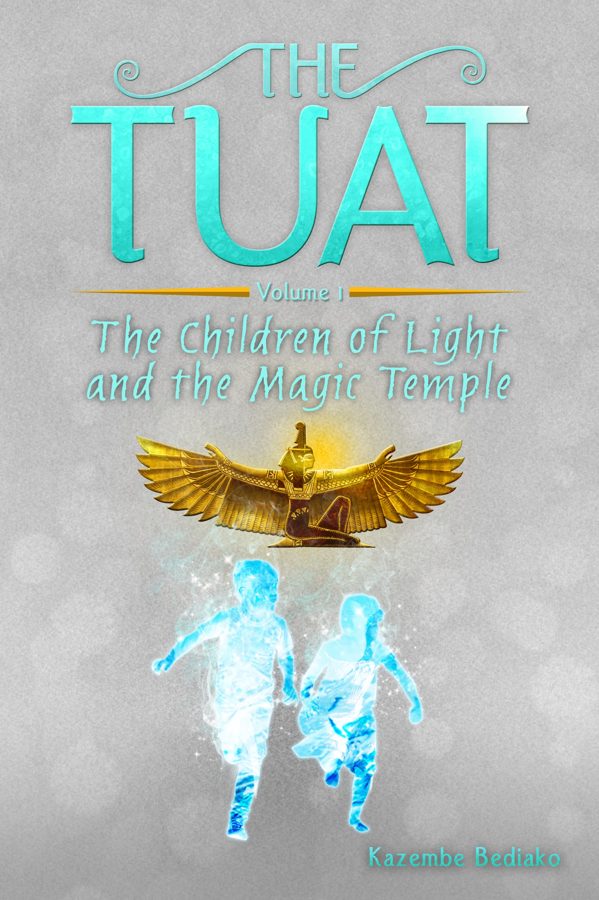
The Tuat Vol. 1 - The Children of the Light and the Magic Temple
“This book echoes in and caresses one’s consciousness like a gentle and subtle wind.”
Review by Dr. Kheftusa Akhiba Ankh
Read the full review
WHEN THE EARS OF WISDOM ARE OPENED SO FALLS THE FOOTSTEPS OF THE MASTER. African Proverbs say ‘No man tells all he knows!’
I dedicate my comments to the Shepsu who have helped preserve the glory and majesty of African Culture and African Spirituality so that we their reincarnated forebears could pick up the gems stones of their ancient wisdom. I can remember many years ago travelling on the D train to Harlem on a trip to Liberation bookstore where I bought Chancellor Williams’ The Destruction of Black Civilisation, a book that nurtured my love for African History and the nobility of my ancestors. Equally years later through the majestic wisdom of Dr John Henrik Clarke I was turned onto a powerful and ground breaking book The Wonderful Ethiopians written and published by Drusilla Dunjee Houston. It was these and so many other books and lectures by African-centred scholars that educated me in regard to the Knowledge of Self and later an appreciation of Self Knowledge.
I mentioned this because as a scholar and child of Africa I have been granted access to a whole new world of possibilities by scholars such as Jake Carruthers, Amos Wilson, Dr. Ben Jochannon and numerous other thinkers. On reflection Chancellor Williams and Drusilla Dunjee Houston and previous generations opened the way for the reawakening of the dead, those who Elijah Muhammad defined as being deaf, dumb and blind and lost in the cultural wilderness of the western world. Indeed we owe a great debt of gratitude to our forebears from Khamit through to the streets of Harlem and beyond for opening the doorway for the awakening of the slumbering black masses. According to the author The Children of the Light and the Magic Temple is a novel or so it would appear however, the book clearly draws inspiration from the monumental work of Ra Un Nefer Amen who has tirelessly taught African spirituality for many years. In actuality, without going into a detailed discussion of the mighty body of work penned by Dr Amen one is reminded of the fictional novel Heru the Resurrection which is a pivotal book that highlights the strategic importance of using the novel format to teach the ancient wisdom of Africa to the current generation of Africans.
However, this book review is designed to do four things 1). Explain why this book is important 2). To touch on the core themes expressed within the book 3). To provide an example of the book’s content via a short exploration of chapter ten. 4). I will conclude the review with some brief remarks. However, for clarity it is important to note that my review is derived from my own level of understanding and thus it reflects my own views which may not accord with the views of others or even the author’s.
Prior to explaining the importance of this book, it is worth stating what the book is about. According to the author ‘The Story of the Tuat: Children of Light and the Magic Temple’ occurs in a period of Kamitic history leading up to the unification of Taui. Between the creation of the great empire known as Kamit or Taui, the two lands and the time of the fifth dynasty after almost 1000 years the government has become very corrupt under foreign rule’ (Bediako, 2016, IX). The book is dedicated to examining a people’s quest for both personal and collective liberation. However, the premise of this text is to encourage Africans to return to the fundamental principles of African spiritual culture, and to reject the imposition of foreign ideas and the rival philosophy of seitan/sethian power politics which takes the shorter and destructive path towards the acquisition of power. In that sense the battles depicted in this book should be likened to the esoteric interpretation of the principle of Jihad or the battle waged between Set and Heru i.e. a holy war that actually takes place within one’s spirit and within the social dynamics of the larger society.
The importance of this text
It is true that what we glean from any book is dependent on what insights one already possesses; and one’s ability to still one’s thoughts in order to comprehend the deeper meanings and nuances that lay hidden within a book’s pages. This book echoes in and caresses one’s consciousness like a gentle and subtle wind and tacitly suggests that African spirituality is a valuable tool in relation to the reconstruction of African culture. The book breathes life into the hidden history of what Dr Ben called Hapi Valley Civilisation. While Cheikh Anta Diop and Dr Ben have provided historical insights into the Hapi Valley Civilisation, this book reveals startling facets of African spiritual culture. The book engages in an archaeological investigation of the inner planes of African and universal consciousness. While it may be described as a work of fiction; it transcends this limited description as it provides access to an ancient and contemporary mystical world that can be and has been accessed by the author! In truth, to successfully engage with this book we must depart from a Eurocentric praxis pertaining to the linear understanding of history and time. Given that most African people are unaware of their stolen legacy, due to European scholars’ systematic erasure of real African history most (even educated) Africans have lost a true knowledge of themselves and their culture.
Equally, Africans have scornfully abandoned and no longer practice the spiritual systems that paved ancient Africa’s pathway to power. While the author has drawn on the work of Ra Un Nefer Amen the book stands on the broad shoulders of our revered ancestors like Boukman, Blyden and Garvey, who exalted us to walk in the footsteps of our past in order to construct a roadmap for our liberation. Given the author’s immersion into African spirituality and African history he is able to tap into the historical and cerebral pathways of our African forebears. Thus, the author is able to unearth the complex metaphors of a people whose oppressed status precludes them from being credited with the creation of the Hapi Valley Civilisation. In particular, the book correctly indicates, without a hint of prejudice or bigotry that we the diasporian Africans who Elijah Muhammad referred to as the Lost Founds lost in the wilderness of the western world; are the original people of the planet and the architects of a civilisation that lasted over four thousand years. For that alone this book is worth reading! Nonetheless I would still caution you into thinking that what my person experienced will reflect your own experience in relation to the book as the keys to unlock one’s understanding are related to the elevation of one’s consciousness.
The Core Themes
Whether stated implicitly or not the book links the past, present and future in a quest to understand, adhere to and cultivate the 11 Laws of existence that were carefully examined and defined in Ra Un Nefer Amen’s book, Maat the 11 Laws of God. The premise of Bediako’s book is based both on the spiritual and scientific understanding codified in Dr Amen’s UAAB text! It indicates that man has four brains, the R complex/reptilian, mammalian and human brain plus the frontal lobe which is the seat of man’s divinity (Amen, 2013). At heart Bediako’s approach underscores the notion that man, and woman have the ability to transcend the animal and human existence in order to awaken their divinity. While Bediako does not directly mention the two aforementioned books his story shines a light on the scientific content of Dr Amen’s work in a fluid and dynamic way.
The point being the book highlights the sacred science enshrined in African cosmology; additionally the book provokes the reader to question the western worldview that underpins the world’s foremost religious systems. Undoubtedly, the book challenged me to stop thinking and trying to absorb the meaning of every word. Rather I elected to still my thoughts and sail downstream and absorb the light and wisdom hidden within the mystic’s words which became etched into my imagination. Eventually I discarded my scholastic training so I could embrace the truth buried within the treasure house of African cosmology that has been reborn within a small cadre of returned ancestors dedicated to the restoration of Hapi Valley culture. A core facet of the author’s method is the infusion of an African-centred concept of time that illustrates the book’s characters’ ability to reincarnate back onto the physical plane in order to fulfil their divine destiny. This fluid understanding of time highlights the omnipresence of consciousness and its ability to be transferred across time through genetically fluid ancestral lines that allows the returning ancestors to assume new bodies whilst being able to access the accumulated wisdom of past lives.
The book also examines and challenges our conceptualisation of consciousness pertaining to being awake, sleeping and dreaming. It is not surprising that mystics and adepts of all cultures explore and articulate the inner meanings and functions of being awake, sleeping or dreaming. In this text, the author causes one to reflect on the shallow meanings ascribed to commonly used definitions of dreams and awakened states. In that sense, the text is inherently philosophical as it launches us into the complex yet seemingly simplified consciousness of our noble ancestors the Kamau. The references to the mountains of the moon and the Twa people is indicative of the evolutionary and cultural migration patterns of the Hapi Valley civilisation. The idea being that Egypt or Khamit was born within the inner regions of Africa and that Khamit’s wisdom and power was a result of an accumulative historical process where the various people of the Hapi valley infused their cultural, ethnic and spiritual knowledge into successive migratory patterns which formed the basis for the creation of ancient Khamit which became the capstone of African civilisation.
Chapter 10
Chapter ten makes a number of illuminating points. It opens with the following statement ‘do you understand that you are neither your body or your spirit’ (Bediako, 2016, 95). Here the author points to the transcendental aspects of the person that we may exist outwardly as an individual but in actuality we are part of the whole that corresponds to Neter or the all in all. This is important as it demonstrates the author’s deep and significant grounding in his own ancestral wisdom which in turn corresponds to the universal and scientific laws that transcend one’s ancestral lineage and even one’s cultural orientation. The emphasis here lies in locating the hidden truths and to inform Africans of our legacy, and birth in addition to highlighting the importance of living in accordance with an African way of life through one’s actions as opposed to just disseminating information regarding the substance of African philosophy. The author’s use of metaphors as tools of enlightenment is useful and duly noted.
For example, the pursuit of the young girls by Sethian or Setian Watchers throws up some interesting points in relation to standard definitions of both history and spirituality! In this particular scenario three African girls are being pursued by a group of men who intend to kill them. The idea that the lives of Africans are in danger from oppressive forces is clearly a familiar one.
Indeed, if you have read the work of our scholars such as Dr Ben, Clarke or Chancellor Williams or examine the lives of Malcolm X, Dessalines, Boukman, Harriet Tubman or Queen Kahina from North Africa, you will recognise that Africans possess a warrior faculty embedded within our DNA. However, unlike the Euro-Asian warrior tradition our military and warrior class is not tasked with leading the nation. The (legitimate) limitations ascribed to the African warrior class is encapsulated by the Yoruba who say, no one loves Ogun (the premier martial Orisha), except in times of war.
The Yoruba maxim has numerous meanings, but it also raises questions regarding whether the African warrior tradition has been abandoned by modern day Africans, and whether we understand that a peaceful warrior can legitimately manifest a martial component when lawfully required. One notes that on page ninety-seven Ur Aua Abaso whose title Ur Aua indicates he is a King sends five body guards all of whom are Shekems i.e. chiefs and priests to rescue the girls (Bediako, 2016, 97). The implication being that one aspect of leadership revolves around the defence of the people’s interests which raises another set of questions dependent on your definition of defence. Still the recent African history pertaining to the MAAFA and colonialism suggests that this question of defence in the face of oppression has been a critical factor for Africans both at home and abroad. As Africans’ existence (since the fall of African civilisation) has revolved around the question of defence whether in Haiti or throughout the Caribbean from Dessalines, Nat Turner, Zumbi and Malcolm, the question of defence and its various dimensions, has engaged African intellectuals, priests and warriors.
The answer to the question lies within the context of a wholistic understanding of African cultures which gave birth to the Maroons, and the great Kingdom of Palmares that flourished during the period of enslavement in Brazil. Needless to say, the perspectives of Marcus Garvey, Amilcar Cabral and Diop, that the heart beat and core foundations of defence (in all its permutations) lies within a people’s culture. A lawful appreciation of the author’s story is indicative of the understanding that culturally and spiritually evolved people can legitimately possess a territorial imperative designed to maintain and protect their interests without being in opposition to their spiritual principles. However, I digress back to the book.
On page ninety-eight we are told that Nehahaher is hunting the girls because ‘one of them is a direct descendant of the Amen Dynasty [and that her] DNA carries the evidence of a Kamau Bloodline as the root of Khamit’ (Bediako, 2016, 98). The author’s comments tacitly convey the importance of ancestral bloodlines, the implication being that culturally enlightened people respect, nurture and protect their bloodlines as said bloodlines carry the seedlings of their own salvation. This is important as the actions of the Setian nation indicate that it is committed to the systematic destruction of the Khamitic in order to secure the continued oppression of the people! Strikingly the noble bloodlines of Africa were scattered during the MAAFA and like the body of Ausar they have been deposited in different geographic locations and are waiting to be retrieved, made whole and resurrected.
However, the most intriguing aspect of the chapter was the statement regarding the EDFU scrolls and the corresponding claim that ‘according to these scrolls, civilisation came from the South by a band of invaders from the Ware Nations under the leadership of the Shemsu Heru Kingship’ (Bediako, 2016, 99). The geographical aspect of the author’s statement accords with Dr Ben’s thesis that the ancient Egyptians stated that they came from ‘the foothills of the mountains of the Moon where the God Hapi dwells’ (Ben-Jochannan, 1989), equally the role of the Shemsu Heru is intriguing and enigmatic. Despite having read volumes of books, the statements regarding the Ware Nations was new to me. I slid off in my imagination wondering whether the author had a hidden historical manuscript that would expand and elucidate on some of the gems lodged within this small book. Ultimately, I began to question whether I have dedicated enough time to my own spiritual liberation? How can we empower our brothers and sisters with knowledge if we have not properly fathomed the depths of our own understanding? Since Neter needs us to come into the world then our failure to liberate the Self has consequences beyond our own existence. The point is we are not really doing the work of the Shepsu or those who sacrificed their lives so that we could find the doorway to our spiritual salvation. Rather, for the most part we dissipate our energy and resources working in routine and mundane jobs that do not serve our collective interests!
The Heruic principles and the Ogun and Herukhuti persona types presented within this book are skilfully woven into the rich cultural and spiritual tapestry of this book. Still, as refreshing as it is to consider and reflect on the internal and external battles fought in this book; it is imperative that we comprehend an important message of this book concerning time. That time does but does not exist at the higher levels of existence! And that what we refer to as time is concrete, ethereal and permeable! Thus, we should see that history is cyclical, and that the thematic patterns of history essentially remain the same. So, the ancient battles, the pursuit and the related oppression that manifested on the physical plane both within the book and our history are as relevant to us today as they were yesterday. In addition, the author provides insight into the correct use of the Yin and Yang (polarities) to both cultivate and ring-fence martial power. Towards the end of the chapter on page one hundred and two the author mentions a powerful meditation that Ptah-Hotep and Iswande do in order to utilise the power of the spirit to assist in mounting the rescue of the girls taken by the Sethians. The limitations of physical force and or the balance required to meet the challenge is exemplified by one of the Shemsu Heru warriors who says in relation to the priests ‘we don’t have time for meditations’ (Bediako, 2016, 102). This classic tension between the use of physical force and spiritual power reminds one of the Kybalion which states that all contradictions are resolved on higher planes of existence. Thus, the chapter closes by showing that the warrior impulse exemplified in the forward momentum of the Trigram Chen must be augmented by the insight/knowledge and deep reflection encapsulated in the I Ching Trigrams of Li and Ken which indicates that any outward (legitimate) manifestation of physical power must be undergirded or assisted by the internal cultivation of wisdom and the power of the spirit. Thus, the key is working within the inner planes to cultivate spiritual power so we can safely express and manifest it on the physical plane. Therefore, it is possible to be both a priest and a warrior and to meet and resolve earthly challenges and the wise recognise the need to cultivate the eleven powers as a way to ensure one’s success.
Concluding remarks
Recently I was asked a seemingly simple question in diasporian Ebonics, who you be? It would be easy to say I knew the answer to the question except knowing is not in the past tense as knowing is placed squarely in the now! Hence the inability to recall the right answer at any time provides us with a lesson in humility. To know means in all circumstances and at all times and knowing is exemplified in doing or completing the correct action automatically. To be frank to know requires a peaceful disposition, vitality and an awareness of the scientific laws that underpin reality. Reading this book resulted in a flood of revelations that have taken time to process. By entwining the thematic strands that characterise the existence of both diasporian and continental Africans whose experiences have kept them trapped within the conceptual confines of Western culture and lost within the opaque cultural desert of an alien culture; the author provides the reader with the rare opportunity to free our African minds. Can you hear the call of Sankofa the mystic and enigmatic bird, can you see the majestic Bennu bird rising from the ashes of the MAAFA! Are you ready to embrace your own spiritual culture! Like the metaphor of Auset, the book served as a reminder that all fragments must be made whole and that despite the odds and seeming opposition we must hold fast to our divine destiny. Thus, do not be oppressed by the burdens of life to the extent that you fail to understand or live your destiny. May the author continue the mission to propagate the teachings of our enlightened ancestors who fought, bled and died to maintain our wisdom traditions. Oh, Africans remember your teachings and culture were once the light of the world, so teach our people and together we can teach the world; so, it was before and so it will be. Amen!
Dr Kheftusa Akhiba Ankh, Summer Solstice
From a Reader
“Loved book two Kazembe :) eagerly await book 3!!! … Already the UK market who I’ve recommended are now reading it.”
Alison Gardner, on Behutet: The Defeat of the Sebau
Explore more wisdom teachings at ShepsEnTchaas.com
